Marine diesel engines operate under high temperatures, heavy loads, and continuous operating conditions. Despite advances in engine technology, internal mechanical faults can still occur if early warning signs go unnoticed. One of the most significant risks is the formation of oil mist inside the crankcase, which can lead to engine damage, costly downtime, and, in severe cases, crankcase explosions.
To minimise these risks, modern vessels rely on Oil Mist Detection (OMD) Systems. These systems continuously monitor crankcase conditions and provide early warnings when abnormal oil mist levels are detected, allowing engineers to investigate potential issues before they become major failures.
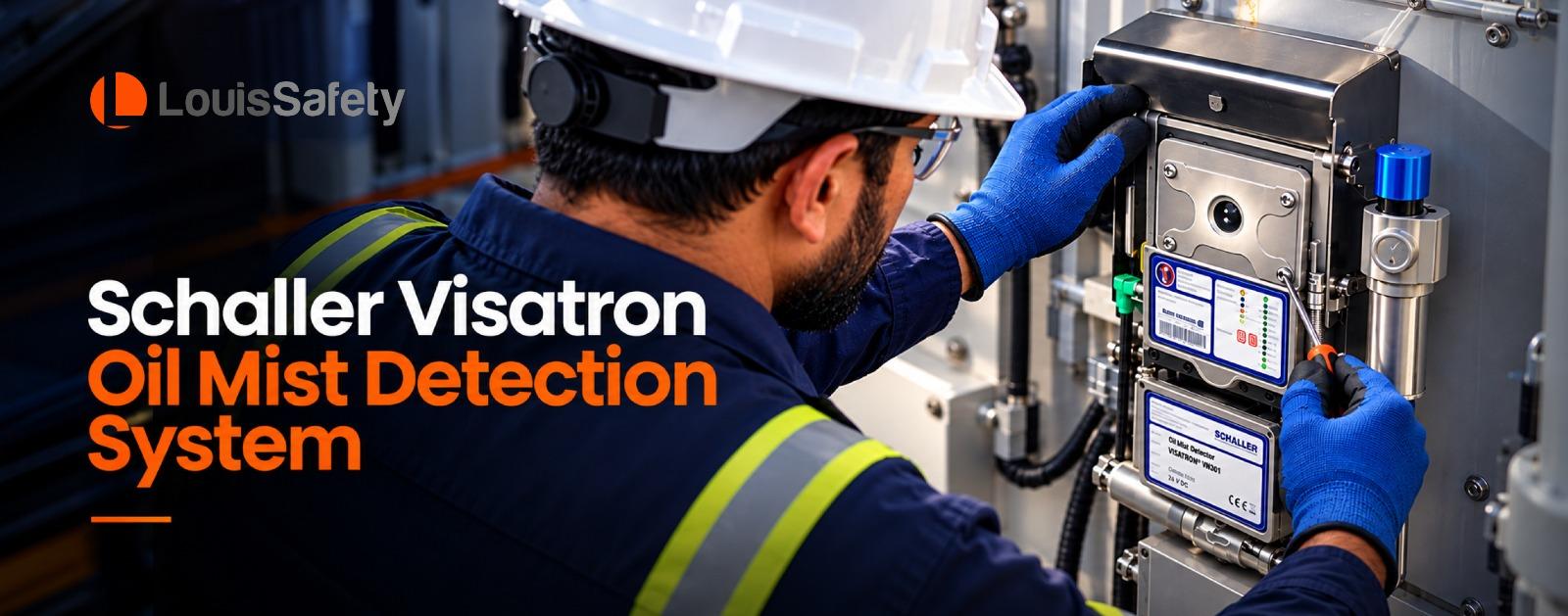
Among the industry's most trusted solutions is the Schaller Visatron Oil Mist Detection System. Widely used on commercial vessels, offshore assets, and marine engines worldwide, it provides accurate and continuous monitoring to enhance engine safety and reliability.
However, installing an Oil Mist Detection System is only the first step. Regular inspection, servicing, testing, calibration, certification, and the use of genuine Schaller spare parts are essential to ensure long-term performance and compliance. This guide explains how the Schaller Visatron system works, its key benefits, and why professional maintenance plays a vital role in protecting marine engines.
What is an Oil Mist Detection System?
An Oil Mist Detection (OMD) System is a critical marine safety system designed to continuously monitor the concentration of oil mist inside the crankcase of large marine diesel engines.
Oil mist forms when lubricating oil comes into contact with overheated engine components caused by mechanical problems such as:
- Bearing failures
- Excessive friction
- Lubrication failure
- Overheating
- Component wear
- Misalignment of moving parts
If the concentration of oil mist rises beyond safe levels, it can ignite and cause a crankcase explosion, resulting in severe engine damage, operational downtime, and risks to crew safety.
An Oil Mist Detection System continuously samples air from the crankcase and alerts engineers when abnormal oil mist levels are detected. This early warning enables maintenance teams to investigate and resolve developing faults before they escalate into major failures.
Why Oil Mist Detection is Important
A crankcase explosion is one of the most dangerous engine failures that can occur on board a vessel. Apart from damaging critical engine components, it can lead to expensive repairs, unexpected downtime, and safety risks for personnel.
An Oil Mist Detection System provides an early warning, allowing engineers to take corrective action before hazardous conditions develop. The key benefits include:
- Early detection of engine faults
- Prevention of crankcase explosions
- Improved crew safety
- Reduced maintenance costs
- Increased engine reliability
- Lower operational downtime
- Enhanced vessel availability
By identifying issues at an early stage, operators can schedule maintenance proactively instead of dealing with emergency repairs.
What is the Schaller Visatron Oil Mist Detection System?
The Schaller Visatron Oil Mist Detection System is a globally recognised solution for monitoring oil mist levels in marine diesel engine crankcases.
Designed specifically for demanding marine environments, the system continuously analyses crankcase conditions using advanced optical sensing technology. If abnormal oil mist concentrations are detected, it immediately activates alarms, allowing engineers to investigate the source of the problem before serious damage occurs.
Schaller Visatron systems are widely installed on:
- Cargo vessels
- Container ships
- Tankers
- Offshore support vessels
- Passenger vessels
- Naval ships
- Marine power plants
- Industrial diesel engines
Its proven accuracy, reliability, and long service life make it one of the preferred Oil Mist Detection Systems in the maritime industry.
How Does the Schaller Visatron System Work?
The Schaller Visatron system continuously samples air from each crankcase compartment and measures oil mist concentrations using advanced optical sensors. The monitoring process includes:
Continuous Air Sampling
Air is continuously drawn from each crankcase compartment through sampling lines.
Optical Detection
Sensitive optical sensors analyse the concentration of oil mist particles within the sampled air.
Data Analysis
The control unit continuously evaluates the measured values against preset alarm thresholds.
Alarm Notification
If oil mist levels exceed safe operating limits, the system immediately activates visual and audible alarms.
Early Fault Investigation
The early warning allows engineers to identify overheating bearings, lubrication failures, or mechanical defects before they develop into serious engine failures.
This continuous monitoring significantly improves engine safety and operational reliability.
Main Components of the Schaller Visatron System
A typical Schaller Visatron Oil Mist Detection System consists of:
- Central Control Unit
- Optical Sensor Unit
- Sampling Distribution System
- Alarm Indicators
- Display Panel
- Communication Interfaces
- Power Supply
Each component plays an important role in ensuring accurate monitoring and dependable operation.
Common Causes of Oil Mist Formation
Oil mist usually develops due to abnormal engine operating conditions. Some of the most common causes include:
- Bearing overheating
- Lubrication system failures
- Excessive friction
- Misaligned components
- Worn crankshaft bearings
- Connecting rod failures
- Piston damage
- High operating temperatures
- Mechanical wear
Detecting these issues early helps prevent extensive engine damage and unexpected operational interruptions.
Key Features of the Schaller Visatron System
Modern vessels require reliable monitoring systems that support safe engine operation while meeting international marine safety requirements. The Schaller Visatron Oil Mist Detection System provides continuous monitoring, helping ship operators improve safety, reduce maintenance costs, and protect critical engine components.
Continuous Real-Time Monitoring
The system continuously monitors oil mist concentrations while the engine is operating, providing uninterrupted protection throughout every voyage.
High Detection Accuracy
Using advanced optical sensing technology, the system accurately detects even slight increases in oil mist concentration, enabling early fault identification.
Fast Alarm Response
When abnormal oil mist levels are detected, the system immediately activates alarms, allowing engineers to respond before a minor issue becomes a major engine failure.
Reliable Marine Performance
Designed specifically for harsh marine environments, the Schaller Visatron system delivers dependable performance even under vibration, humidity, and demanding operating conditions.
Easy Operation
A clear display panel and straightforward alarm indications help engine personnel monitor system performance and respond quickly whenever necessary.
Durable Construction
Built for long-term marine applications, the system is engineered to withstand continuous operation while maintaining high measurement accuracy.
Benefits of the Schaller Visatron Oil Mist Detection System
Installing an Oil Mist Detection System offers several operational and safety advantages for vessel owners and operators.
Enhanced Crew Safety
Early detection of abnormal oil mist levels significantly reduces the risk of crankcase explosions, helping protect onboard personnel.
Reduced Downtime
Identifying developing engine faults before failure allows maintenance to be planned efficiently, minimising unexpected vessel downtime.
Lower Maintenance Costs
Early intervention helps prevent extensive engine damage, reducing repair costs and avoiding expensive emergency maintenance.
Improved Engine Reliability
Continuous monitoring helps maintain engine performance and supports long-term operational reliability.
Protection of Critical Engine Components
The system provides an additional layer of protection for bearings, crankshafts, pistons, and other vital engine components by identifying abnormal conditions at an early stage.
Improved Operational Efficiency
Reliable engine monitoring enables vessel operators to optimise maintenance schedules, improve equipment availability, and maintain uninterrupted operations.
Support for Regulatory Compliance
Routine servicing and proper maintenance of the Schaller Visatron system help support compliance with applicable marine safety requirements and classification society standards.
Applications of the Schaller Visatron Oil Mist Detection System
The Schaller Visatron system is suitable for various marine and industrial applications, including:
- Commercial cargo vessels
- Container ships
- Oil tankers
- Bulk carriers
- Offshore support vessels
- Passenger ferries
- Cruise ships
- Naval vessels
- Marine power plants
- Industrial diesel engines
Its versatility makes it a trusted solution for protecting critical engines across multiple sectors.
Why Regular Inspection and Maintenance Matter
Even the most advanced Oil Mist Detection System requires regular inspection to maintain its performance and accuracy. Over time, sensors, sampling lines, and electronic components may be affected by contamination, vibration, and normal wear. Routine servicing helps to:
- Maintain accurate oil mist detection
- Verify alarm functionality
- Prevent false alarms
- Identify worn components
- Extend equipment lifespan
- Ensure reliable engine protection
Professional inspection, testing, calibration, certification, and the use of genuine Schaller spare parts help ensure the system continues to operate accurately, providing dependable protection throughout its service life.
Servicing, Testing, Calibration & Genuine Schaller Spare Parts
Installing a Schaller Visatron Oil Mist Detection System is only the beginning. To ensure accurate monitoring and dependable engine protection, the system must be regularly inspected, tested, calibrated, and maintained. Routine servicing helps identify wear, prevents false alarms, and ensures the system operates within manufacturer specifications.
Proper maintenance not only improves system reliability but also helps vessel owners minimise unexpected downtime, reduce repair costs, and maintain compliance with marine safety requirements.
Why Regular Servicing is Essential
Like any critical marine safety equipment, an Oil Mist Detection System is exposed to harsh operating conditions, including vibration, heat, oil vapours, and continuous engine operation. Over time, these conditions can affect sensors, sampling lines, and electronic components. Regular servicing helps to:
- Maintain accurate oil mist detection
- Verify system performance
- Prevent false alarms
- Detect worn or damaged components
- Extend equipment lifespan
- Improve engine safety
- Support reliable vessel operations
Routine maintenance also ensures that developing faults within the monitoring system are identified before they affect engine protection.
Inspection Procedures
A professional inspection typically includes:
- Visual inspection: engineers examine the complete Oil Mist Detection System for signs of physical damage, loose connections, corrosion, contamination, or wear.
- Sampling line inspection: sampling pipes and connections are checked to ensure there are no blockages, leaks, or restrictions that could affect measurement accuracy.
- Sensor examination: optical sensors are inspected and cleaned where necessary to maintain accurate detection of oil mist concentrations.
- Electrical connections: power supplies, communication cables, terminals, and connectors are inspected to ensure stable operation.
- Alarm system verification: visual and audible alarms are tested to confirm they activate correctly whenever abnormal oil mist levels are detected.
Functional Testing
Functional testing confirms that every component of the system performs according to manufacturer specifications. Testing generally includes:
- Sensor response verification
- Alarm activation testing
- Display functionality
- Communication interface checks
- System diagnostics
- Sampling performance verification
This ensures the system can respond quickly when abnormal crankcase conditions occur.
Calibration
Calibration is one of the most important maintenance procedures for any Oil Mist Detection System. Over time, sensor accuracy may gradually change due to environmental conditions or prolonged operation. Professional calibration helps to:
- Maintain measurement accuracy
- Improve alarm reliability
- Reduce false alarms
- Ensure dependable engine protection
- Extend sensor life
Calibration should always be performed using approved procedures and suitable test equipment.
Certification
Following successful inspection, testing, and calibration, the system can be certified as operating within the applicable maintenance requirements. Certification demonstrates that:
- The system functions correctly.
- Alarm systems operate as intended.
- Sensors perform accurately.
- Critical components have been inspected.
- Maintenance has been completed according to recommended procedures.
Proper documentation also supports vessel maintenance records and inspection readiness.
Genuine Schaller Spare Parts
Using genuine spare parts is essential for maintaining the long-term performance of the Schaller Visatron system. Original components are specifically designed to ensure:
- Accurate measurement
- Reliable operation
- Long service life
- Full compatibility
- Consistent system performance
Non-genuine replacement parts may compromise system accuracy and reduce overall reliability.
Common Issues That Require Attention
Routine inspections often identify problems before they develop into serious failures. Some common issues include:
- Contaminated optical sensors
- Blocked sampling lines
- Electrical connection faults
- Sensor ageing
- False alarms
- Communication failures
- Damaged cables
- Calibration drift
- Power supply issues
Early correction of these issues helps maintain uninterrupted engine protection.
Best Practices for Vessel Operators
To maximise system performance, vessel operators should:
- Schedule routine inspections
- Perform regular functional testing
- Keep sensors clean
- Replace worn components promptly
- Use genuine Schaller spare parts
- Maintain service records
- Follow manufacturer maintenance recommendations
Preventive maintenance significantly reduces the risk of unexpected failures and improves overall engine reliability.
Why Choose Louis Safety?
Our experienced marine engineers deliver professional services tailored to the requirements of commercial vessels, offshore assets, and marine operators, alongside our wider marine automation services. Our services include:
- Schaller Visatron supply
- System inspection
- Functional testing
- Calibration services
- Certification support
- Genuine Schaller spare parts
- Troubleshooting
- Preventive maintenance
- Technical consultation
- Onboard service support
We are committed to helping our clients maintain reliable engine protection while reducing operational risks.
Conclusion
The Schaller Visatron Oil Mist Detection System is an essential safety solution for protecting marine diesel engines against the risks associated with crankcase oil mist. By providing continuous monitoring and early fault detection, it helps reduce downtime, improve engine reliability, and enhance crew safety.
To ensure dependable performance, the system should be supported by regular inspection, testing, calibration, certification, and genuine Schaller spare parts. Professional maintenance not only extends the life of the equipment but also helps vessels maintain safe and efficient operations.
Whether you require a new installation, routine servicing, calibration, or technical support, contact Louis Safety for expert marine safety solutions tailored to your operational needs.
For project updates and news from our engineering team, follow Louis Safety on LinkedIn.
Frequently Asked Questions
What is the purpose of an Oil Mist Detection System?
An Oil Mist Detection System continuously monitors oil mist levels inside a marine engine crankcase and provides early warnings of abnormal conditions that could lead to engine damage or crankcase explosions.
Why is the Schaller Visatron system widely used?
It is known for its high accuracy, reliable performance, advanced optical sensing technology, and suitability for demanding marine environments.
Which vessels use Schaller Visatron systems?
The system is commonly installed on cargo ships, container vessels, tankers, offshore support vessels, cruise ships, naval vessels, and other marine diesel engines.
How often should the system be serviced?
Regular inspection and maintenance should be carried out in accordance with the manufacturer's recommendations and the vessel's maintenance schedule.
Is calibration necessary?
Yes. Calibration ensures that sensors continue to provide accurate measurements and reliable alarm performance.
Can contaminated sensors affect performance?
Yes. Dirt or oil contamination can reduce sensor accuracy and may result in false alarms or delayed detection.
Why should genuine Schaller spare parts be used?
Genuine parts are designed specifically for the system, ensuring compatibility, accuracy, durability, and reliable long-term performance.
What happens if oil mist levels exceed safe limits?
The system activates visual and audible alarms, allowing engineers to investigate and correct the underlying issue before it develops into a serious engine failure.
Does Louis Safety provide onboard services?
Yes. Louis Safety offers inspection, testing, calibration, servicing, and technical support for Schaller Visatron Oil Mist Detection Systems.
Why is preventive maintenance important?
Preventive maintenance helps maintain system accuracy, reduces unexpected failures, extends equipment life, and improves overall vessel safety.