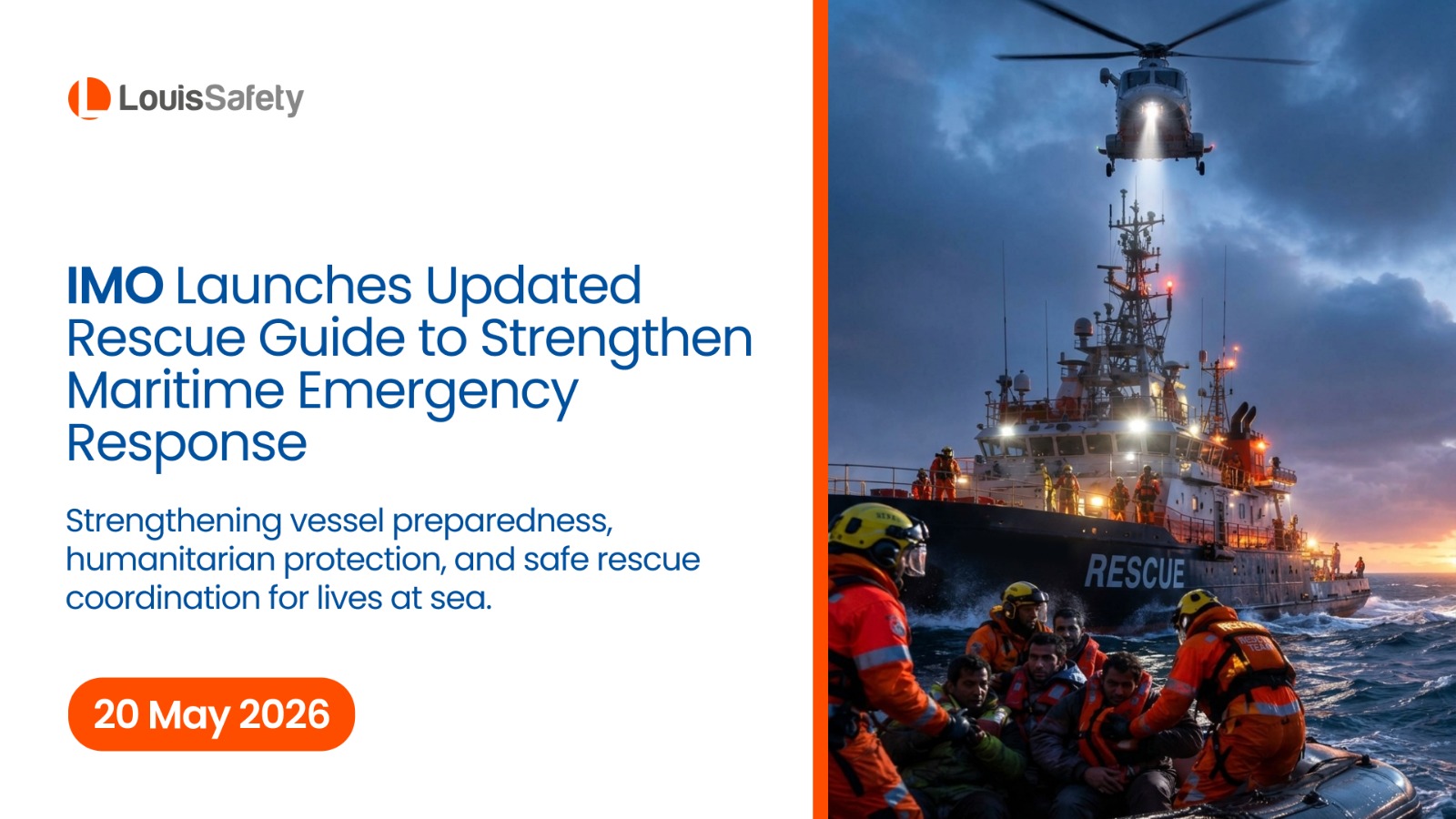
The safety of human life at sea remains one of the maritime industry’s highest priorities. As global rescue operations become increasingly complex, the International Maritime Organization (IMO), together with UNHCR and the International Chamber of Shipping (ICS), has introduced an edition of the Updated IMO Rescue Guide to strengthen international maritime rescue procedures and improve humanitarian response efforts worldwide.
The revised guidance is designed to support shipmasters, vessel operators, governments, and Rescue Coordination Centres (RCCs) in managing rescue operations more effectively while ensuring compliance with international maritime safety standards.
According to international maritime reports, thousands of people continue to face distress situations during unsafe sea crossings each year, highlighting the growing importance of coordinated Search and Rescue (SAR) operations and emergency preparedness across the maritime sector.
What is the IMO Rescue at Sea Guide?
The IMO Rescue at Sea Guide is an international maritime guidance document that helps shipmasters and maritime authorities respond effectively to people in distress at sea. The updated edition provides operational, legal, and humanitarian guidance for conducting safe and coordinated rescue operations while protecting human life at sea.
The revised guide reinforces one of the most important principles in maritime law:
Every person in distress at sea must be rescued without discrimination.
Why the Updated Guide Matters
Modern maritime operations face evolving challenges including migration crises, extreme weather conditions, long-distance rescue coordination, and increasing humanitarian responsibilities for commercial vessels operating globally.
The updated IMO guidance aims to improve:
- Search and Rescue (SAR) coordination
- Emergency response efficiency
- Crew preparedness during rescue operations
- Communication between rescue authorities
- Safe disembarkation procedures
- Humanitarian treatment of rescued persons
- Compliance with international maritime regulations
As commercial vessels are often the closest responders during emergencies, clear operational guidance is essential for ensuring both crew safety and successful rescue missions.
Key Responsibilities for Shipmasters
The revised Rescue at Sea Guide outlines practical responsibilities for shipmasters and vessel operators during rescue situations. These procedures help improve operational efficiency while ensuring proper safety standards are maintained throughout the mission.
Key operational guidance includes:
- Preparing life-saving appliances and rescue equipment
- Coordinating with Rescue Coordination Centres (RCCs)
- Monitoring onboard safety conditions
- Reporting the number and condition of rescued persons
- Maintaining emergency communication procedures
- Providing immediate humanitarian assistance onboard
- Protecting the safety of crew members and rescued individuals
The guide also clarifies that shipmasters are not responsible for determining refugee or asylum status, allowing rescue teams to focus entirely on life-saving operations and emergency response.
Strengthening Maritime Compliance & Safety Standards
The updated Rescue at Sea Guide supports broader international maritime safety frameworks including SOLAS and SAR conventions. Compared to previous editions, the revised version introduces more detailed operational procedures, stronger humanitarian guidance, and improved coordination practices for complex rescue scenarios.
For maritime operators and marine safety stakeholders, staying updated with IMO regulations is essential for:
- Maritime compliance
- Operational readiness
- Emergency preparedness
- Crew training and awareness
- Risk reduction during rescue operations
- Strengthening onboard safety culture
The Growing Importance of Marine Safety Preparedness
Preparedness remains one of the strongest foundations of maritime safety. From emergency response systems and lifesaving appliances to onboard fire protection and crew readiness, every aspect of rescue operations depends on proper planning and compliance.
As the maritime industry continues to evolve, updated IMO guidance helps shipowners, operators, and marine professionals strengthen their ability to respond effectively during emergencies while protecting lives at sea.
At Louis Safety, we believe that staying informed about evolving maritime safety regulations and emergency preparedness standards plays a vital role in building a safer and more resilient maritime industry.
Supporting Maritime Safety Through Awareness & Compliance
For companies operating in the marine and offshore sectors, understanding updated rescue procedures is no longer optional — it is part of responsible maritime operations. Awareness of international rescue guidance helps improve operational confidence, compliance standards, and emergency response capabilities across the industry.
Conclusion
The IMO’s updated Rescue at Sea Guide represents an important step toward improving international rescue coordination, strengthening humanitarian response efforts, and enhancing maritime safety standards worldwide.
By providing clearer operational guidance and reinforcing the industry’s responsibility to protect human life at sea, the revised framework supports safer, faster, and more effective rescue operations across global waters.
For maritime operators, safety professionals, and vessel owners, staying aligned with evolving IMO regulations is essential for maintaining compliance, operational readiness, and long-term maritime safety excellence.