
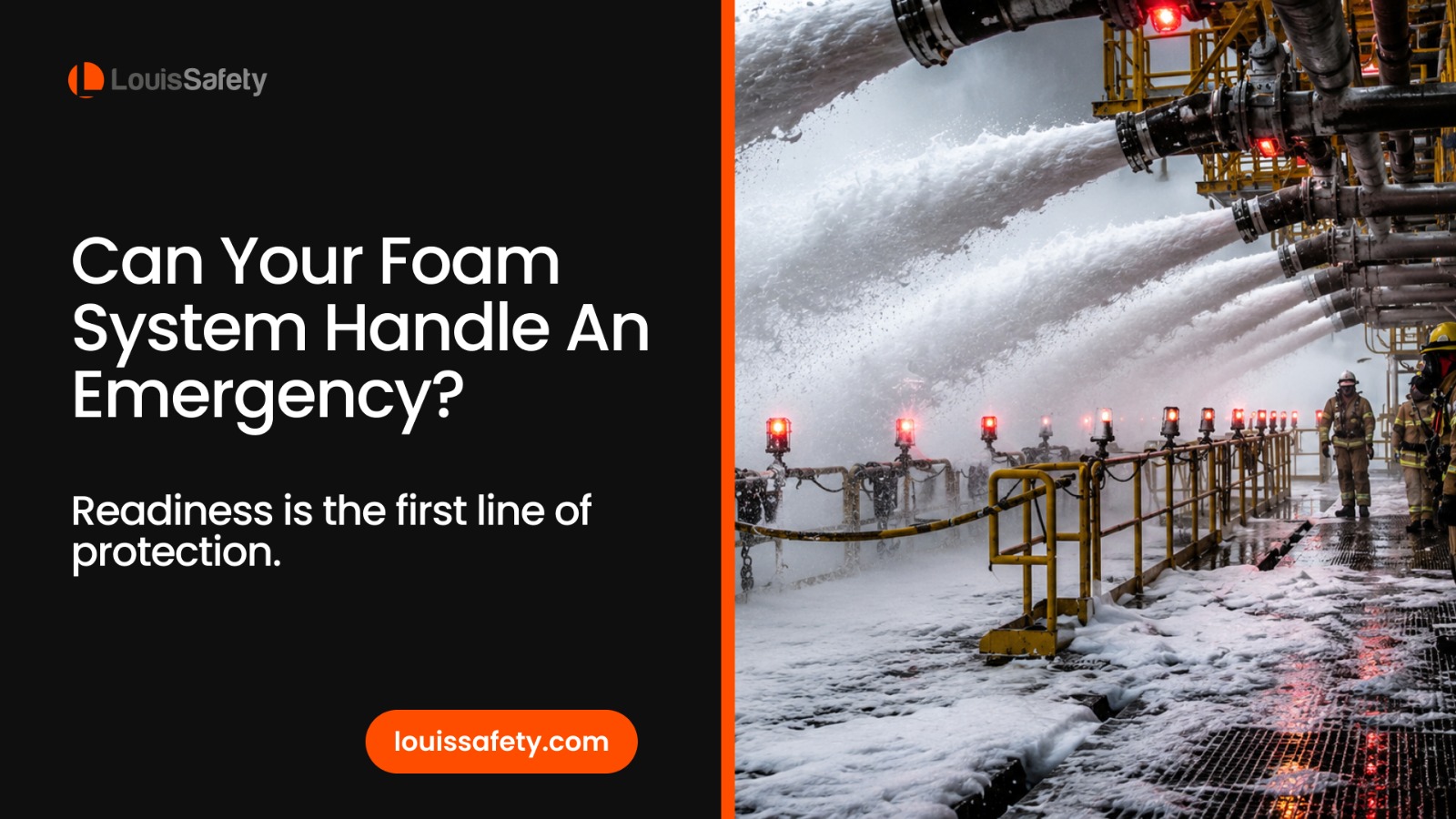
Why Marine Foam System Readiness Is Critical for Fire Safety and Compliance
A fire at sea leaves no room for hesitation. In the event of a fuel, oil, or chemical fire, your foam firefighting system becomes the first and most critical line of defense. This is why Marine Foam System Inspection is essential for ensuring that firefighting equipment remains fully operational and ready to respond when needed.
However, many vessel operators and offshore facilities only discover system deficiencies when an emergency occurs—when failure is no longer an option. The real question is not whether your vessel has a foam system. The real question is: Can your foam system perform exactly as designed when lives, assets, and operations depend on it?
Understanding the Role of Marine Foam Firefighting Systems
Foam firefighting systems are specifically engineered to suppress Class B fires involving flammable liquids. By creating a stable foam blanket over the fuel surface, the system effectively:
- Suppresses flammable vapors
- Cools the burning surface
- Prevents oxygen from reaching the fuel
- Reduces the risk of re-ignition
- Enhances firefighter safety during emergency response
These systems are commonly installed in:
- Engine Rooms
- Helidecks
- Cargo Pump Rooms
- Fuel Storage Areas
- Tank Decks
- Offshore Platforms
- FPSOs
- Marine Terminals
When properly maintained, a fixed foam system can rapidly control fire incidents and significantly reduce damage to personnel, property, and the environment.
The Hidden Threat: Foam Systems That Look Ready but Aren’t
Many foam systems appear operational during routine visual inspections. Unfortunately, appearance alone does not guarantee performance.
Over time, critical components can deteriorate due to age, contamination, corrosion, and environmental exposure.
Common issues include:
Foam Concentrate Degradation
Foam concentrate can lose its firefighting effectiveness because of:
- Aging
- Temperature fluctuations
- Contamination
- Improper storage conditions
A degraded foam concentrate may fail to produce the foam quality required to extinguish a fire effectively.
Corrosion in Marine Environments
Salt-laden air and harsh offshore conditions accelerate corrosion in:
- Storage tanks
- Piping systems
- Valves
- Foam monitors
- Foam makers
Even minor corrosion can compromise system reliability during an emergency.
Blocked Foam Discharge Devices
Nozzles, foam makers, and monitors can become partially blocked due to debris, sediment, or internal deterioration, reducing foam coverage and performance.
Incorrect Foam Proportioning
A malfunctioning proportioner can result in an incorrect foam-to-water ratio, reducing extinguishing efficiency and potentially causing system failure during a fire event.
Lack of Performance Testing
Without regular testing, hidden deficiencies remain undetected until the system is activated during an actual emergency.
At that point, corrective action may come too late.
Why Foam Concentrate Analysis Is Essential
Foam concentrate testing is one of the most important aspects of marine fire protection maintenance.
Regular foam concentrate analysis helps verify that the concentrate still meets operational and performance requirements.
Testing typically evaluates:
- Foam Expansion Ratio
- Drainage Characteristics
- pH Value
- Density
- Viscosity
- Sedimentation Levels
- Contamination
- Overall Firefighting Performance
Through laboratory analysis, vessel operators can identify deterioration early and take corrective action before safety is compromised.
Compliance Is More Than a Requirement
International maritime regulations require foam firefighting systems to remain fully operational throughout their service life.
Compliance inspections typically include:
- Annual Marine Foam System Inspection
- Foam Concentrate Testing
- Proportioning System Verification
- Equipment Functionality Checks
- Documentation Review
- Certification Support
Failure to maintain compliance can result in:
- Increased fire risk
- Operational downtime
- Regulatory findings
- Costly repairs
- Potential threats to crew and asset safety
More importantly, non-compliant systems may not perform when needed most.
Building a Reliable Foam System Maintenance Program
A proactive maintenance strategy is the key to ensuring long-term system reliability.
Routine Inspections
Regular inspections help identify signs of wear, corrosion, leaks, and mechanical damage before they become critical issues.
Foam Concentrate Analysis
Periodic laboratory testing verifies that the foam concentrate remains effective and compliant with industry standards.
Proportioning System Testing
Verifying the correct foam-to-water mixing ratio ensures the system can deliver optimal firefighting performance.
Preventive Maintenance
Replacing worn or damaged components before failure helps maintain system readiness and reduces emergency repair costs.
Crew Training
Personnel should understand system operation, emergency procedures, and maintenance requirements to ensure effective response during fire incidents.
Performance Verification
System performance testing confirms that foam discharge rates, application rates, and distribution patterns meet design requirements.
The Cost of Waiting
Consider a vessel carrying fuel cargo where a fire breaks out on deck. The foam system is activated, but years of neglected maintenance have caused concentrate degradation and proportioning issues.
The result?
- Delayed fire suppression
- Increased asset damage
- Greater risk to crew safety
- Potential environmental impact
- Significant financial losses
In contrast, a regularly inspected and tested foam system can contain the incident quickly, minimizing damage and protecting lives.
The difference often comes down to one factor: preparedness.
Readiness Is the First Line of Protection
Fire emergencies do not wait for maintenance schedules.
Every valve, proportioner, foam maker, monitor, and litre of foam concentrate must function exactly as intended when activated.
A reliable marine foam firefighting system provides:
- Enhanced crew safety
- Improved emergency response capability
- Regulatory compliance
- Asset protection
- Environmental protection
- Operational confidence
Frequently Asked Questions (FAQs)
How often should marine foam concentrate be tested?Foam concentrate should be tested periodically according to manufacturer recommendations, classification society requirements, and applicable maritime regulations. Regular testing helps verify performance and compliance.
Why is foam concentrate analysis important?Foam concentrate analysis identifies degradation, contamination, and performance issues that could reduce firefighting effectiveness during an emergency.
What are the signs of foam system deterioration?Common signs include corrosion, sediment accumulation, blocked discharge devices, damaged components, concentrate discoloration, and inconsistent proportioning performance.
Can a foam system pass visual inspection but still fail during operation?Yes. Many performance-related issues cannot be detected visually and require professional testing and verification.
What industries benefit from foam firefighting systems?Foam systems are widely used in marine, offshore, oil and gas, petrochemical, aviation, industrial, and storage terminal applications where flammable liquid fire hazards exist.
Why is annual Marine Foam System Inspection necessary?Annual inspections help ensure system reliability, identify hidden deficiencies, support regulatory compliance, and maintain emergency preparedness.
Is Your Foam System Ready?
We help vessel operators, offshore facilities, and marine asset owners maintain confidence in their fire protection systems through professional:
- Foam Concentrate Analysis
- Fixed Foam System Inspection
- Foam Proportioning Testing
- Marine Fire Safety Surveys
- Compliance Verification Services
- Preventive Maintenance Support
Don’t Wait for an Emergency to Reveal a Weakness.
Every day without testing is a day spent relying on assumptions instead of certainty.
Partner with Louis Safety to verify your foam system’s readiness, strengthen compliance, and ensure reliable protection when every second counts.
Schedule Your Foam System Assessment Today and Turn Compliance Into Confidence.


