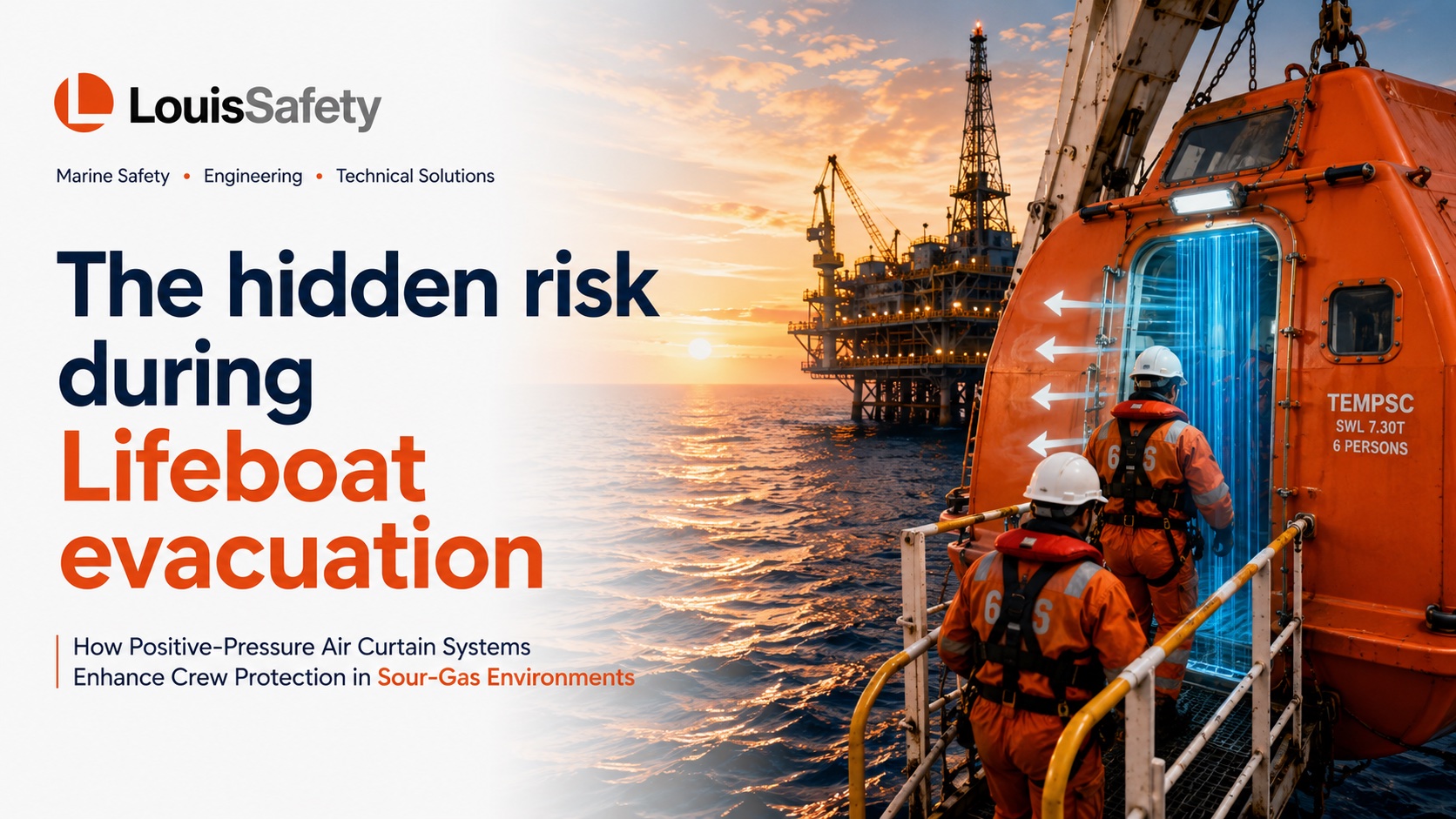
When Safety Is Not a Choice but a Lifeline
Imagine a stormy night in the open sea. The vessel is shaking, alarms are blaring, and the only chance of survival is the lifeboat hanging on the davit—ready to launch. But what if that lifeboat fails to start? Or the ventilation inside chokes rather than saves?
This is not fiction. It’s a scenario the International Maritime Organization (IMO) seeks to prevent with the introduction of Resolution MSC.559(108)—a safety reform that’s less about regulation and more about saving lives.
This new resolution updates how we inspect and maintain lifeboats, rescue boats, davits, and release mechanisms, with a special focus on ventilation systems in fully enclosed lifeboats. These aren’t just technical upgrades—they’re life-preserving corrections to how the industry prepares for the unexpected.
Charting the Course: How We Got Here
The IMO has been steadily improving maritime safety over the years. Resolution MSC.402(96) first established core rules for lifesaving equipment inspections. Later, MSC.535(107) introduced key updates related to ventilation systems.
MSC.559(108) doesn’t replace those resolutions—it strengthens and expands them to reflect modern challenges, real-world incidents, and advances in marine technology.
Why This Update Matters
Here’s what this new resolution is really about:
- Making lifesaving systems more dependable
- Adapting inspections to today’s technologies
- Catching risks early, before they become disasters
In essence, this is about future-proofing emergency readiness for vessels across the globe.
What’s Changing in Inspection Protocols?
Here’s a closer look at the main upgrades this resolution introduces:
1. Lifeboat Structure and Components
Inspectors must now conduct comprehensive checks for corrosion, cracks, and damage—even in hard-to-reach areas. Every piece of equipment, whether fixed or loose, gets reviewed.
2. Engine and Propulsion
From fuel system reliability to the speed of engine start-up, propulsion systems need to perform flawlessly. These checks ensure lifeboats don’t just float—they move when lives are on the line.
3. Safety Systems
Sprinklers, air supplies, and steering controls will now undergo full-function testing. These systems must activate quickly and smoothly, with zero room for error.
4. Power and Backup Systems
Lights, alarms, and communication devices all run on power. If the power fails, everything else crumbles. That’s why power system testing is now a non-negotiable part of the annual inspection.
5. Bailing and Stability Aids
Inspectors will test bailing systems to ensure lifeboats stay dry and balanced. Fender and skate systems—key during launch—must also be in perfect working order.
6. Righting Mechanisms in Rescue Boats
If a rescue boat capsizes, it must right itself immediately. This resolution demands clear proof that righting systems are capable of doing just that.
7. Ventilation in Enclosed Lifeboats
This is perhaps the most significant update. Enclosed lifeboats must now undergo ventilation testing to guarantee breathable air inside—especially in hot, humid, or enclosed conditions.
Preparing Ahead: A Smart Strategy for Ship Operators
Although January 1, 2026, is the official enforcement date, the smart move is to start now. Early preparation allows operators to:
- Identify weak spots in current safety protocols
- Train crew and technicians on the new requirements
- Implement gradual upgrades to avoid last-minute scrambles
Being early isn’t just about compliance—it’s about confidence and peace of mind.
Build the Lifeboat Before the Storm Hits
In maritime life, hope is not a plan. A regulation like MSC.559(108) isn’t just legal housekeeping—it’s the difference between survival and catastrophe. Think of it not as a checklist, but as a compass—pointing us toward a safer, more prepared future at sea.